
Past Life Regression: The Complete Guide to Understanding Your Soul's Journey

We live in a unique moment in human history. As old timelines collapse and structures around us splinter and fall away, more people are looking for answers outside of established systems. Many are curious about how they got to this moment in their journey. "Does any of this matter?" is a question we ask when finding ourselves on this path. Others feel a longing for Home that they can't quite articulate.
This questioning and longing is not by accident. It is reflective of inner-wisdom and divine timing coming together to point us in the direction of intention and self-remembrance. What lies on the other side of these questions is a more comprehensive notion of self — one that encapsulates the soul and not just the roles we play in this lifetime.
Past life regression is one modality that allows us to peer into the watery depths of the soul's memory. It is a topic growing in popularity and interest with popular books like Many Lives, Many Masters by Dr. Brian Weiss and Journey of Souls by Dr. Michael Newton. But past lives and regression work have a rich history spanning beyond the new age and psycho-spiritual movements. This guide will walk you through everything you need to know — from ancient roots to modern practice, and from choosing a practitioner to preparing for your first session.
As a certified hypnotherapist (MA, CHt) trained through the National Association of Transpersonal Hypnotherapists and with additional training in various regression methodologies, including Dolores Cannon’s QHHT modality, I've had the privilege of facilitating countless past life regression sessions over the years. I've also pioneered an integrative approach called Astro-Hypnosis, which combines birth chart analysis with regression work to create more targeted, personalized sessions.
Understanding Past Life Regression: Definition & Ancient Roots
Past life regression is a gentle hypnotherapy technique that guides you into a deeply relaxed state to access memories and experiences from your soul's journey. You remain fully conscious and in control while exploring insights that may hold the key to understanding your current life patterns, recurring fears, relationship dynamics, or deeper questions about your soul’s purpose and intention in this current lifetime.
But before we dive into the modern therapeutic practice, it's helpful to understand that past life regression — or accessing soul memory, as it's understood in various traditions — is not a recent invention. It draws on ancient wisdom that has existed across cultures for millennia.
The Ancient & Indigenous Roots

Hinduism has centered reincarnation (samsara) as a foundational spiritual philosophy for thousands of years. The concept of karma — that our actions create patterns that follow us through lifetimes — is foundational to Hindu understanding of existence. Past lives aren't just theoretical; they're understood as part of the soul's evolutionary journey toward moksha (liberation).
Buddhism similarly teaches rebirth as part of the cycle of existence. Buddhist practitioners have long used meditation techniques to recall past lives as part of their spiritual development. The Buddha is said to have accessed memories of previous incarnations, and this practice continues in certain Buddhist lineages today.
Indigenous cultures worldwide have understood soul memory and ancestral wisdom in ways that the West is only beginning to recognize. Many indigenous traditions don't separate "past lives" from ancestral memory or collective wisdom. Their understanding is more fluid and interconnected. The soul carries forward lessons, and these can be accessed through various ceremonial and healing practices.
Shamanic traditions across the globe — Amazonian ayahuasca ceremonies, Siberian soul retrieval practices, Native American vision quests, African spiritual healing — have included elements of accessing experiences beyond this single lifetime. Shamans journey to retrieve lost soul fragments, communicate with ancestors, and access wisdom that transcends the current incarnation.
What the West calls "past life regression" has been practiced in various forms across the globe for millennia. Indigenous healers, Eastern spiritual practitioners, and shamanic cultures have long understood that our current life is informed by experiences beyond this single incarnation. What we see today in the Western world is a fascinating overlap between the fields of psychology and spiritualism, with research being foundational to teaching about past lives and past life regression to broader audiences.
Modern Therapeutic Context
In contemporary practice, past life regression uses hypnotherapy to create a deeply relaxed state, similar to being in a dream. The conscious mind softens enough to access intuition, creativity, and the senses, allowing the subconscious to communicate more freely. During this state:
You remain fully aware and can speak, respond to questions, and remember the experience
Your practitioner guides you through prompts designed to access relevant memories or experiences
Information may come visually, through feelings, bodily sensations, or simply "knowing"
The experience is recorded so you can process and integrate insights afterward
From Ancient Practice to Modern Therapy: The Western Evolution
While reincarnation and soul memory have been understood across indigenous and Eastern spiritual traditions for millennia, the formalization of past life regression as a Western psycho-spiritual therapeutic tool is relatively recent. In the 20th century, practitioners began developing structured methodologies to access these memories for healing and self-understanding.
What follows is a look at the modern therapeutic evolution — understanding that it builds on much older wisdom and that these Western practitioners served as bridges, translating ancient knowledge into contemporary contexts.
Early Western Explorations (1900s-1960s)
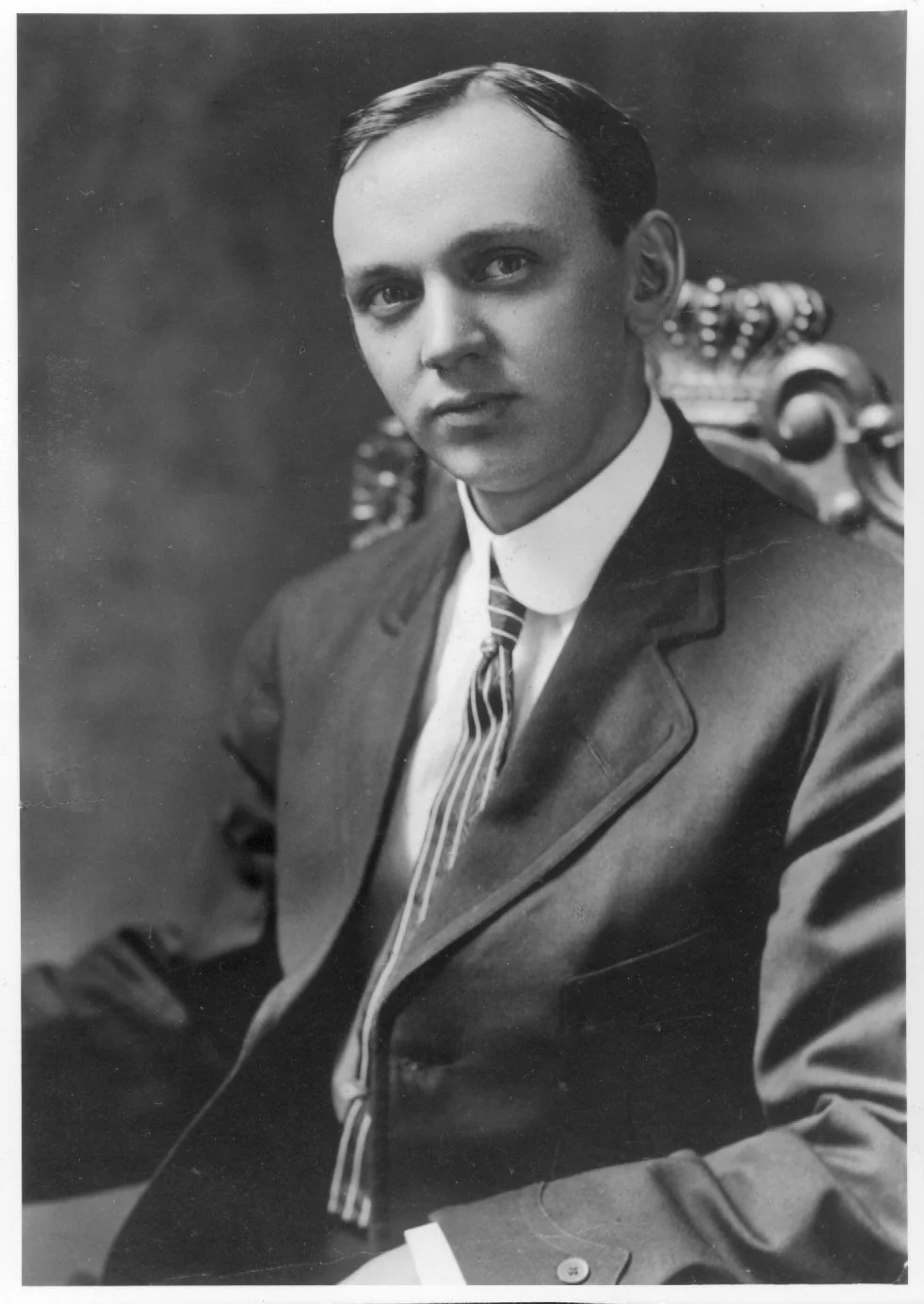
Edgar Cayce, known as the “Sleeping Prophet” channeled through a trance state.
The early 20th century saw Western practitioners beginning to explore concepts that had long existed in Eastern and indigenous traditions. Edgar Cayce (1920s-1940s), known as the "Sleeping Prophet," accessed past life information while in trance states, bringing concepts from Eastern mysticism to Western audiences. The Theosophical movement, led by figures like Helena Blavatsky, studied and shared reincarnation concepts from Eastern traditions, helping to introduce these ideas to Western spiritual seekers.
By the 1950s and 1960s, early hypnotherapists began exploring regression as a therapeutic tool, experimenting with accessing memories beyond childhood to see what emerged.
These practitioners served as bridges — translating and adapting ancient wisdom from Eastern and indigenous traditions into Western therapeutic contexts. They were not originators, but rather students and interpreters of much older knowledge.
Michael Newton's Life Between Lives (LBL) Hypnotherapy
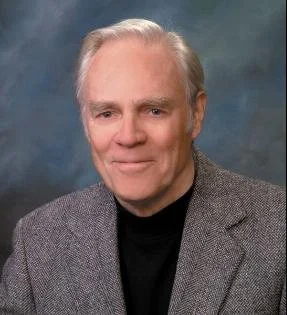
Michael Newton’s research brought credibility and methodology to the field of past life regression.
Michael Newton pioneered a specific approach to regression that focused on accessing the "inter-life" period — the time between incarnations. His books, Journey of Souls, Destiny of Souls, and Life Between Lives, documented his clients' experiences of what happens after death and before the next incarnation.
What makes Newton's Life Between Lives approach unique is its focus on:
Soul groups and the relationships we maintain across lifetimes
Spirit guides and higher-level beings who support our evolution
Life planning and the choices our soul makes before incarnating
The Council of Elders and the review process between lives
Newton's framework revealed the continuity of consciousness and our soul's deliberate planning between lives — concepts that deeply inform contemporary regression work.
Dolores Cannon's Quantum Healing Hypnosis Technique (QHHT)

Dolores Cannon speaking on her Quantum Healing Hypnosis Technique (QHHT).
Dolores Cannon developed her Quantum Healing Hypnosis Technique (QHHT) over 45 years of practice, starting in the 1960s and continuing until her death in 2014. Her approach differs from other regression methods in several key ways:
The Subconscious (or Higher Self): After the past life portion of the session, Cannon would call forth what she termed the "Superconscious" — the part of us connected to Source consciousness that knows everything about our soul's journey and has the ability to facilitate instant healing.
Emphasis on healing: QHHT sessions often include spontaneous physical and emotional healing, with clients reporting relief from chronic conditions after accessing the root cause in a past life.
Cannon demonstrated that past life regression could facilitate profound physical and emotional healing by accessing what she called the Subconscious — the part of us connected to Source.
Other Influential Practitioners
Dr. Brian Weiss, a psychiatrist and psychotherapist, popularized past life regression therapy with his book Many Lives, Many Masters, which documented his unexpected discovery of past life regression through a patient's therapy sessions. His background in traditional psychiatry gave the field added credibility in Western medical contexts.
Andy Tomlinson, a British practitioner, has focused particularly on using regression for trauma resolution, developing protocols for working safely with difficult material that surfaces during sessions.
Joanne DiMaggio introduced Soul Writing and other complementary techniques that help people access past life information outside of formal hypnotherapy sessions.
The Next Evolution: Integrative Approaches
Modern practitioners increasingly combine multiple modalities to create more comprehensive, personalized approaches. This evolution recognizes that while the pioneers established valuable frameworks, each practitioner brings their unique gifts and expertise to the work.

Cat Wilson, Founder of Soul Support and Astro-Hypnosis.
I am trained as a clinical hypnotherapist with NATH. I am also a Level 1 QHHT practitioner, though my practice has shifted to work with Newton’s methods of regression and soul memory. I’m also in the process of researching my own methodology, Astro-Hypnosis, which integrates birth chart analysis with past life regression work. I've found that our soul's patterns show up both in astrological signatures and in past life memories, and this overlap fascinates me as a regressionist and astrologer. The North and South Nodes, for instance, often point directly to karmic themes that emerge naturally in regression sessions. By examining the birth chart before a session, we can create more focused explorations — targeting specific themes, relationships, or life patterns that the chart indicates are ripe for investigation.
The Past Life Regression Process: What Happens in a Session

Understanding what actually happens during a past life regression session can help ease any anxiety and set realistic expectations. While specific approaches vary by practitioner and methodology, most sessions follow a similar arc.
The Hypnotic Trance State
First, let's clarify what hypnosis actually is and isn't. You are not asleep. You are not unconscious. You do not lose control. Most people describe the hypnotic state as feeling like vivid daydreaming or the relaxed, focused state you experience while absorbed in a good book or movie.
The hypnotic trance used in past life regression is simply a deeply relaxed state where:
Your conscious mind's usual filters and skepticism quiet down
Your subconscious becomes more accessible
You remain aware of your surroundings
You can speak, move, and respond to questions
You remember everything that happens
You can choose to end the session at any time
Common Misconception: You won't be unconscious or lose control. The trance state is simply a doorway to accessing information that's harder to reach when your conscious mind is fully engaged.
Typical Session Flow
1. Consultation (20 minutes): Before the regression begins, we’ll will discuss your intentions, questions you'd like to explore, and any questions. This is the time to share what patterns you're investigating, fears you're working with, or themes you're curious about. A good practitioner will also review any medical or psychiatric considerations and ensure you're a good candidate for regression work.
2. Guided Relaxation (20 minutes): Using gentle hypnotherapy techniques, I’ll guide you into progressively deeper states of relaxation. This include deep breathing prompts, progressive muscle relaxation, and guided imagery. The goal is to help your body and conscious mind relax so your subconscious can come forward.
3. The Regression Journey (60-75 minutes): Once you're in a receptive state, we begin exploring past life memories together. You'll be guided to explore:
Significant moments in that lifetime
Key relationships and their connection to your current life
The circumstances of that life — geographical location, time period, occupation, family dynamics
What was learned in that lifetime and how it relates to your current life questions or patterns
4. Integration & Insight (15-20 minutes): After the regression portion, I’ll guide you back to normal waking consciousness. We'll then discuss what you experienced, extract meaningful insights, and help you organize it in your mind. This is when we invite the logical mind back into the conversation!
5. Post-Session Process: I will provide a recording of your session so you can revisit it later. If you have an iPhone, I AirDrop it at the time of your appointment. Otherwise, a link to a Google Drive folder will be emailed to you within 24-hours. Many insights continue to unfold in the days and weeks after a session as you process the experience more fully.
What You Actually Experience
People experience regression in different ways. Some see vivid images, like watching a movie. Others receive information through feelings, physical sensations, or simply "knowing." All of these are valid ways to access information.
You might experience:
Visual: Seeing scenes, places, people, or objects
Kinesthetic: Feeling sensations in your body, emotions, or temperature changes
Auditory: Hearing voices, sounds, or music
Knowing: Simply having information come to you without imagery
If you "don't see anything," that doesn't mean the session isn't working. Many profound sessions happen through feeling and knowing rather than visual imagery. A skilled practitioner will help you work with whatever way information naturally comes to you, so don’t stress if you’re not a visual person.
Therapeutic Benefits of Past Life Regression
Past life regression can address a wide range of patterns, questions, and challenges. While it's not a replacement for medical or psychiatric treatment, many people find it complements their healing journey by addressing the spiritual and emotional dimensions of their challenges.
Healing Unexplained Fears & Phobias
Many clients discover the root cause of persistent phobias traced to experiences in the regression journey. Understanding the origin often reduces the intensity of the fear.
Even if you view the experience metaphorically rather than literally, the therapeutic value remains. Your subconscious creates narratives that help you process and release what's been holding you back. The "ah-ha moment" when the fear suddenly makes sense can be quite liberating.
Example: A client with an inexplicable fear of commitment discovered a past life where she was forced into an arranged marriage that never felt fulfilling. In this current lifetime, what came through as a “fear of commitment” was her soul understanding that partnership could wait until later in life, that she wanted time to be independent and fortify her sense of self in this lifetime prior to partnership. Understanding this allowed this client to relax around the social pressures of seeing her friends get married and start families in their 20s. She no longer internalized her personal timeline as a flaw.
Breaking Recurring Relationship Patterns
We often attract the same personality types or find ourselves playing out similar dynamics across different relationships with partners, family members, or colleagues. Past life regression can reveal:
Karmic relationships and unresolved dynamics from other lifetimes
Soul contracts — agreements made before incarnation to help each other learn specific lessons
Why certain people feel immediately familiar or trigger intense reactions
Patterns of power, betrayal, abandonment, or co-dependency that span lifetimes
Recognizing these patterns doesn't mean you're destined to repeat them. Instead, awareness creates the possibility of making different choices and creating healthier dynamics moving forward.
Discovering Your Life Purpose & Soul Mission
Many people come to regression work with questions about their purpose: Why am I here? What am I supposed to be doing? What gifts do I have to offer? More than ever, people are asking these questions at younger ages, too! Think of what we can accomplish for humanity when we know ourselves at such loving and accepting levels.
Accessing your soul's wisdom can reveal:
Themes that appear across lifetimes — teaching, healing, creating, leading, serving
Skills or talents you've developed over many incarnations
The specific lessons you're here to learn in this lifetime
How your current challenges are often preparation for your soul's mission
Understanding your life purpose from a soul perspective can bring a sense of peace and direction, even when your external circumstances are challenging.
Releasing Emotional & Physical Blocks
Chronic anxiety, depression, or physical pain that hasn't responded to traditional approaches sometimes has roots in past life experiences. When these issues are addressed from a soul level, we are given another way of looking at the problem. That perspective can bring relief.
Important medical disclaimer: Past life regression should never replace proper medical care. Always work with qualified healthcare providers for physical or mental health concerns. Regression work is complementary, not alternative, to appropriate medical treatment.
That said, many practitioners have documented cases where clients experienced relief from chronic pain, migraines, or psychosomatic symptoms after accessing and processing related past life experiences. From my work with clients, what I see most often is radical acceptance. Clients are shown things in a way that help them release blame, shame, and guilt. They find compassion and understanding for themselves. When we anchor this into our experience, our relationship to so many other factors can shift for the better.
Gaining Spiritual Perspective
Perhaps the most profound benefit of past life regression is the expanded perspective it offers on existence itself. Clients often report:
Reduced fear of death after experiencing the continuity of consciousness
Understanding that we're spiritual beings having a human experience, not the other way around
Recognition that current life challenges are opportunities for growth rather than random suffering
Connection to something larger than the individual self
Understanding of soul evolution across many lifetimes
This perspective shift can be profoundly comforting, especially during difficult times. It contextualizes your current life within a much larger journey.
Deepening Self-Awareness & Personal Growth
Beyond addressing specific issues, past life regression deepens your understanding of yourself, your relationships, and the recurring themes that shape your life. You gain insight into:
Why you're drawn to certain places, time periods, or cultures
The deeper meaning behind your attractions and aversions
Patterns in your choices and behaviors that make more sense in a larger context
How you've evolved across lifetimes and what you're still working on
This self-knowledge supports ongoing personal development and spiritual growth, helping you live more consciously and intentionally.
Who Benefits from Past Life Regression (And Who Shouldn't Try It)
Good Candidates for Past Life Regression
Past life regression can be valuable for:
People with recurring patterns they can't explain — relationship dynamics, career obstacles, or behavioral patterns that feel bigger than this lifetime
Those experiencing unexplained fears — phobias that developed without a clear trigger in this life
Individuals on a spiritual growth path — seeking to understand their soul's journey and purpose
Anyone curious about consciousness — interested in exploring beyond material existence
People who've exhausted traditional approaches — tried therapy, medication, or other treatments without full resolution
Those feeling a pull or calling — experiencing unexplained longing or a sense that "there's more to this"
Who Should Avoid or Seek Clearance First
Past life regression is not appropriate for everyone. You should avoid this work or get clearance from your healthcare provider if you have:
Active psychosis or severe mental health crisis — regression can be destabilizing during acute episodes
Certain dissociative disorders — where distinguishing between reality and imagination is already challenging
Uncontrolled epilepsy — the relaxation process could potentially trigger seizures
Specific psychiatric medications — some medications make it difficult to achieve the relaxed state necessary for regression
A responsible practitioner will screen for these conditions and require medical clearance when appropriate. You can read more about this in the medical waiver when booking your appointment.
What Makes a Successful Session
The people who benefit most from past life regression tend to share certain qualities:
Open mind (a little skepticism is fine!) — A small part of our logical mind stays with us in regression, and that’s okay! If you’re able to stay curious and open, the pieces fall into place
Ability to relax and focus — If you have significant difficulty with meditation or relaxation, regression might be challenging
Willingness to trust the process — Trusting yourself, the practitioner, and the information that comes through will give the experience the space it needs to come through fully
No rigid expectations — Being attached to having a specific experience often blocks authentic emergence
Curiosity rather than certainty — Coming with questions rather than predetermined answers
In my practice, I've found that the people who benefit most are those who come with curiosity rather than certainty. The clients who approach regression as an experiment, staying open to whatever surfaces, often have the most profound experiences.
If you're highly analytical or skeptical to the point of dismissing any information that emerges, it probably isn't worth spending money on regression work. The conscious mind's skepticism can effectively block access to the subconscious. That said, healthy questioning is different from defensive dismissal — you can be both curious and discerning!
How to Find a Qualified Past Life Regression Therapist
Choosing the right practitioner is crucial for a safe, effective experience. Here's what to look for and what questions to ask.
Essential Qualifications
Proper certification: Your practitioner should have graduated from a reputable hypnotherapy training program. Look for certifications from recognized organizations like:
National Association of Transpersonal Hypnotherapists (NATH)
The Newton Institute (for Life Between Lives practitioners)
American Council of Hypnotist Examiners (ACHE)
International Association of Counselors and Therapists (IACT)
Certification programs should require significant training hours and continuing education to maintain active status.
Ethical standards: They should follow professional guidelines including client confidentiality, appropriate boundaries, informed consent, and medical screening protocols.
Red Flags to Watch For
Be cautious of practitioners who:
Have no formal training or certification ("I'm self-taught")
Make promises about specific outcomes ("You'll definitely discover you were Cleopatra")
Use pressure tactics or create urgency ("Book now or lose this opportunity")
Lack appropriate boundaries (offering sessions in inappropriate settings, suggesting friendship)
Don't conduct medical/psychiatric screening
Make grandiose claims about healing abilities
Trust Your Instincts
Beyond credentials and experience, you want to work with someone you trust. Honor your instincts when evaluating practitioners. Research through different means:
Read their website and bio carefully
Check Google reviews and testimonials
Join their email list to get a sense of their personality and approach
Ask around in your network for recommendations
The right practitioner for you might not be right for someone else. You're looking for someone whose approach, energy, and expertise feel aligned with what you need.
How to Prepare for Your First Past Life Regression Session
Proper preparation can significantly enhance your regression experience. Here's how to set yourself up for success.
Before Your Session
Physical preparation:
Get plenty of rest the night before
Stay well-hydrated in the days leading up to your session
Avoid caffeine on the day of your session (it can make relaxation difficult)
Take all prescribed medications as directed
Eat a light meal before your session (not too full, not hungry)
Wear comfortable, loose clothing
Mental and spiritual preparation:
Write down your intentions and questions
Reflect on patterns or issues you're curious about
Set aside time after your session for integration (don't schedule anything immediately after)
What NOT to Do
Don't over-research past lives or try to figure out who you were — this can create expectations that block authentic emergence
Don't expect specific outcomes — you might explore a life you didn't anticipate, and that's often exactly what you need
Don't try to force visions — information comes in many forms, not just visual
Don't drink alcohol or take non-prescribed stimulants before your session — it interferes with the hypnotic state
Don't schedule anything demanding immediately after — give yourself time to process
Is Past Life Regression Real? Science, Skepticism & Personal Truth
It would be intellectually dishonest to write about past life regression without addressing the elephant in the room: Is any of this actually real?
The Scientific Perspective
The scientific community remains largely skeptical of reincarnation and past life memories as literal phenomena. Critics point to several alternative explanations:
False memory creation: The mind is remarkably good at creating narratives, and the hypnotic state can increase suggestibility
Cryptomnesia: Forgotten memories from books, movies, or stories heard long ago can resurface as seemingly "past life" experiences
Cultural conditioning: Our beliefs about reincarnation might shape the narratives we create under hypnosis
Metaphorical processing: The subconscious might create symbolic stories to help us process current life issues
These are valid considerations. The burden of proof for reincarnation as a literal phenomenon has not been met by scientific standards.
The Research That Does Exist
That said, some research suggests the phenomenon deserves serious investigation:
Dr. Ian Stevenson at the University of Virginia spent decades researching children who spontaneously recalled past life memories. He documented thousands of cases where children provided specific details about previous lives that were later verified — names, places, relationships, and circumstances they had no normal way of knowing.
While his work has critics, it represents the most rigorous academic investigation into reincarnation claims and raises questions that pure skepticism struggles to answer.
Therapeutic outcomes research shows that regardless of whether past life memories are literal or metaphorical, the therapeutic benefits are real. Studies on regression therapy document improvements in anxiety, phobias, chronic pain, and relationship patterns. The healing is measurable, even if the mechanism remains debated.
Does It Matter?
Here's where I land after years of facilitating this work: Whether past life memories are literal experiences of reincarnation, creative constructions of the subconscious, accessing collective consciousness, or something else entirely may ultimately be less important than this — the process facilitates real healing and insight.
As a practitioner with a background in both transpersonal hypnotherapy and social justice work, I hold space for multiple truths. I've witnessed:
Clients who had no way of knowing historical details they accurately described
Profound healing from accessing "past life" experiences, regardless of their literal truth
The therapeutic power of narrative and metaphor in creating transformation
The limits of what we can scientifically prove about consciousness
I don't claim to know with certainty what's happening. What I do know is that this work creates positive change in people's lives. I find that meaningful, important, and inspiring.
Your Journey Awaits: Taking the Next Step
If you're feeling called to explore your soul's journey, I invite you to take the next step. You can learn more about my approach and book a session on my past life regression page. Sessions are offered in-person in my office in Wilmington, NC, and virtually.